

Learning how to create a budget is the fastest way to take control of your money. A budget is a simple plan that tells your income where to go before the month begins. You do not need a finance degree, fancy software, or a high salary. You only need about an hour, honest numbers, and a willingness to adjust as you learn.
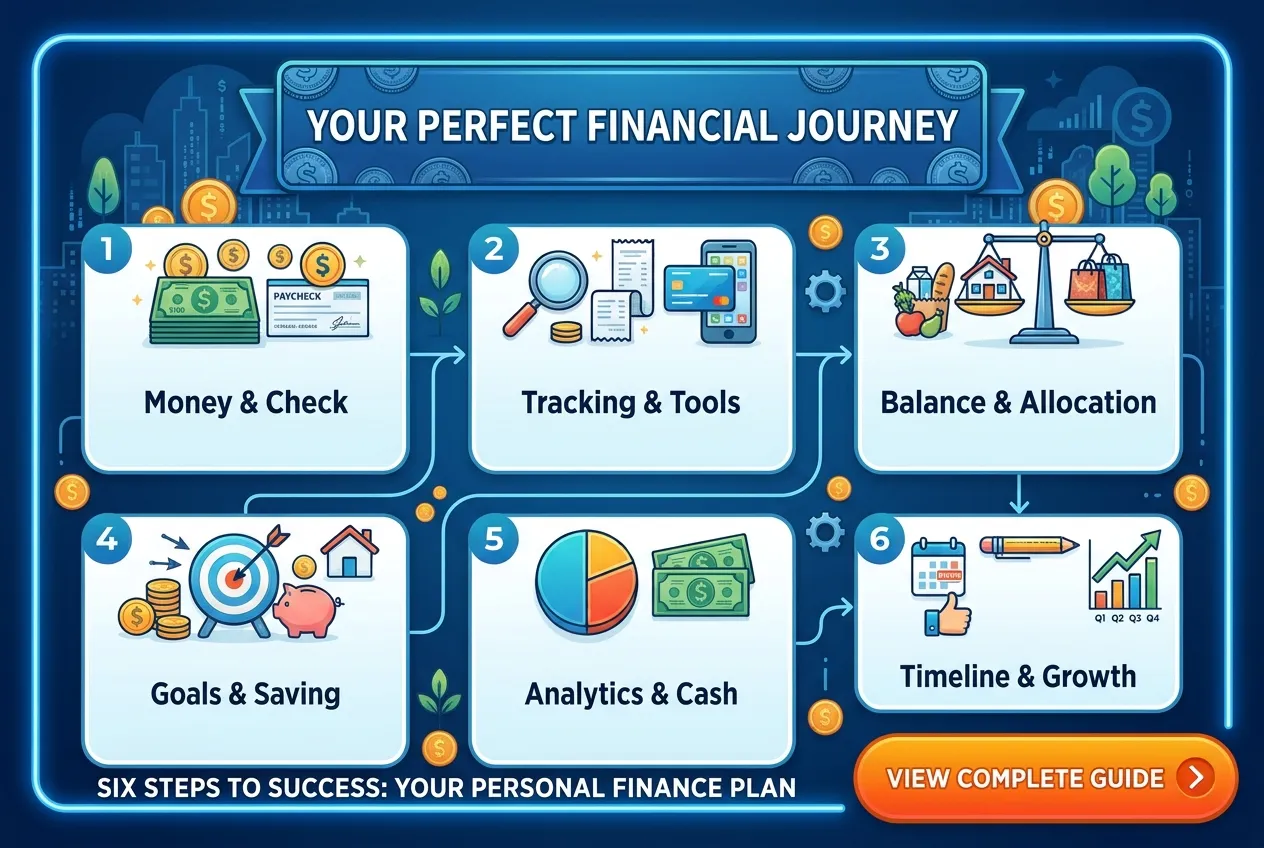
Quick answer: To create a budget, (1) calculate your monthly income, (2) list your fixed and variable expenses, (3) set savings and debt goals, (4) choose a budgeting method such as the 50/30/20 rule, (5) track your spending, and (6) review and adjust every month.
Key Takeaways
- A budget gives every dollar a job before you spend it.
- Start with your real numbers, not your ideal numbers.
- The 50/30/20 rule is an easy starting framework.
- Review monthly. A budget is a living plan, not a one-time task.
What Is a Budget?
A budget is a written plan that compares your expected income with your expected expenses over a set period, usually one month. It shows whether you will have money left over or whether you are on track to overspend.
Many people think budgeting means saying no to everything fun. In reality, a good budget gives you permission to spend on what matters. It also protects you from stress, late fees, and surprise shortfalls.
Why You Should Create a Budget
Budgeting is the base of every strong money plan. Here is what it does for you:
- Shows where your money goes. Small purchases add up faster than most people expect.
- Prevents overspending. Limits keep you honest.
- Builds savings. You decide your savings amount first, not last.
- Reduces debt. A plan makes it easier to pay more than the minimum.
- Lowers stress. Knowing your numbers brings calm.
The Consumer Financial Protection Bureau offers free tools and worksheets because tracking and planning are central to financial well-being.
How to Create a Budget in 6 Steps
Step 1: Calculate Your Monthly Income
Start with your take-home pay, which is the amount that lands in your bank account after taxes and deductions. If your income varies, use your lowest typical month. That keeps your plan safe.
Include every reliable source:
- Salary or wages
- Freelance or side-hustle income
- Regular benefits or support payments
- Interest or dividends you can count on
If you are unsure how much tax is being withheld, the IRS Tax Withholding Estimator can help you check.
Step 2: List Your Expenses
Next, write down everything you spend. Pull up three months of bank and card statements for accuracy. Then split expenses into two groups.
Fixed expenses stay about the same each month:
- Rent or mortgage
- Insurance
- Loan payments
- Subscriptions
Variable expenses change from month to month:
- Groceries
- Transport and fuel
- Utilities
- Dining out and entertainment
- Clothing and personal care
Do not forget irregular costs, such as car repairs, gifts, and annual fees. Divide the yearly total by twelve and add it to your monthly plan.
Step 3: Set Your Financial Goals
A budget works best when it points toward something. Choose two or three goals, such as:
- Build a starter emergency fund
- Pay off a credit card
- Save for a down payment
- Invest for retirement
Give each goal a number and a date. For example, "Save $3,000 in 12 months" equals $250 per month. Our guide to financial planning explains how to turn goals into a full roadmap.
Step 4: Choose a Budgeting Method
There is no single best method. Pick the one you will actually use.
| Method | How It Works | Best For |
|---|---|---|
| 50/30/20 rule | 50% needs, 30% wants, 20% savings and debt | Beginners who want simplicity |
| Zero-based budget | Income minus expenses equals zero; every dollar is assigned | People who like detail |
| Envelope system | Cash is divided into category envelopes | People who overspend with cards |
| Pay-yourself-first | Save a set amount first, spend the rest freely | People who dislike tracking |
The 50/30/20 rule is the easiest place to start. If you take home $3,000 per month, that is $1,500 for needs, $900 for wants, and $600 for savings and debt repayment. If your housing costs are high, adjust the percentages. Free budgeting guides at MyMoney.gov can help you fit the rule to your life.
Step 5: Track Your Spending
A budget on paper means nothing without tracking. Record your purchases daily or weekly. You can use a notebook, a spreadsheet, or a personal finance app that categorizes transactions for you.
Compare actual spending to your plan every week. If you overspend in one category, move money from another category instead of giving up.
Step 6: Review and Adjust Every Month
At the end of each month, ask three questions:
- Where did I overspend, and why?
- Where did I underspend, and can I move that money to a goal?
- Did anything change, such as a raise, a new bill, or a new goal?
Then update the numbers. Most people need two or three months before their budget feels accurate. That is normal.
How to Make Your Budget Stick
Many budgets fail in the first month. These habits help yours last.
- Automate savings. Schedule a transfer on payday so saving happens first.
- Build in fun money. A small, guilt-free amount prevents burnout.
- Use a buffer category. Add 5% for unexpected costs.
- Check in weekly. Ten minutes is enough.
- Celebrate progress. Mark small wins, such as a full month on budget.
If you have no emergency savings yet, start there. Most experts suggest saving three to six months of essential expenses over time. Keep the money in an account protected by the FDIC so it stays safe and easy to reach.
Common Budgeting Mistakes to Avoid
- Being too strict. An unrealistic budget collapses quickly.
- Forgetting irregular expenses. Annual bills can break a plan.
- Ignoring small purchases. Daily coffees and app subscriptions add up.
- Not tracking. Without data, you are guessing.
- Giving up after one bad month. Adjust and continue.
Sample Monthly Budget Example
Here is a simple example for someone with $3,000 in monthly take-home pay.
| Category | Amount | Share |
|---|---|---|
| Housing | $1,000 | 33% |
| Food and groceries | $400 | 13% |
| Transport | $250 | 8% |
| Utilities and insurance | $250 | 8% |
| Fun and personal spending | $600 | 20% |
| Emergency fund and savings | $300 | 10% |
| Debt repayment and investing | $200 | 7% |
This is only an example. Your numbers will differ, and that is fine. The goal is to make every category intentional.
Keep Building Your Money Skills
Budgeting is one skill in a bigger system. Strengthen your foundation with our guide to financial literacy, and explore our complete personal finance beginner's guide. To benchmark your spending, the U.S. Bureau of Labor Statistics shares national data in its Consumer Expenditure Surveys. When you are ready to invest, Investor.gov offers neutral education. You can also find more free tools at EveryToolfy.
Frequently Asked Questions
What is the easiest way to create a budget?
The easiest way is the 50/30/20 rule. Put 50% of your take-home pay toward needs, 30% toward wants, and 20% toward savings and debt repayment.
How much should I budget for each category?
It depends on your income and location. Use the 50/30/20 rule as a starting point, then adjust based on your actual housing, food, and transport costs.
How often should I update my budget?
Review your budget at least once a month. Update it right away after any major change, such as a new job, a move, or a new bill.
What if my income changes every month?
Base your budget on your lowest typical month. When you earn more, send the extra to savings, debt, or your goals.
Do I need a budgeting app?
No. A notebook or spreadsheet works well. An app can save time by tracking and categorizing spending automatically.
Conclusion
Knowing how to create a budget gives you control, clarity, and confidence. Calculate your income, list your expenses, set clear goals, pick a method, track your spending, and review every month. Start simple and improve as you go. Take one hour this week to build your first budget, and your future self will thank you.
Next step: Write down your monthly take-home pay today, then explore more free tools at EveryToolfy.
{"@context":"https://schema.org","@type":"FAQPage","mainEntity":[{"@type":"Question","name":"What is the easiest way to create a budget?","acceptedAnswer":{"@type":"Answer","text":"The easiest way is the 50/30/20 rule. Put 50% of your take-home pay toward needs, 30% toward wants, and 20% toward savings and debt repayment."}},{"@type":"Question","name":"How much should I budget for each category?","acceptedAnswer":{"@type":"Answer","text":"It depends on your income and location. Use the 50/30/20 rule as a starting point, then adjust based on your actual housing, food, and transport costs."}},{"@type":"Question","name":"How often should I update my budget?","acceptedAnswer":{"@type":"Answer","text":"Review your budget at least once a month. Update it right away after any major change, such as a new job, a move, or a new bill."}},{"@type":"Question","name":"What if my income changes every month?","acceptedAnswer":{"@type":"Answer","text":"Base your budget on your lowest typical month. When you earn more, send the extra to savings, debt, or your goals."}},{"@type":"Question","name":"Do I need a budgeting app?","acceptedAnswer":{"@type":"Answer","text":"No. A notebook or spreadsheet works well. An app can save time by tracking and categorizing spending automatically."}}]}